How Elevations Are Quietly Transforming the Way Window & Door Companies Work
- Home
- How Elevations Are Quietly Transforming the Way Window & Door Companies Work


Jamie McKinsey
March 4, 2026
Across the United States, thousands of window and door replacement projects begin every week with a simple question:
What exactly will this house look like once the work is done?
For decades, the answer required sketches, separate CAD drawings, or long explanations between sales teams, installers, permit departments, and homeowners. But in recent years, a growing number of contractors have begun using digital elevation drawings to bridge that gap — transforming how projects are designed, approved, and communicated.
And increasingly, many of those elevations are being created inside Windsketch.
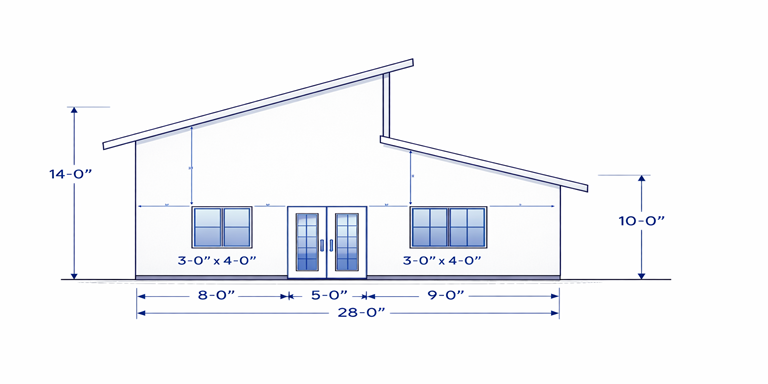
Elevations — technical drawings that show a building façade from a straight-on view — have long been part of architectural practice, used to communicate height, proportions, windows, and structural details of a building’s exterior.
But what used to require specialized drafting tools is now becoming something a salesperson or permit coordinator can generate in minutes.
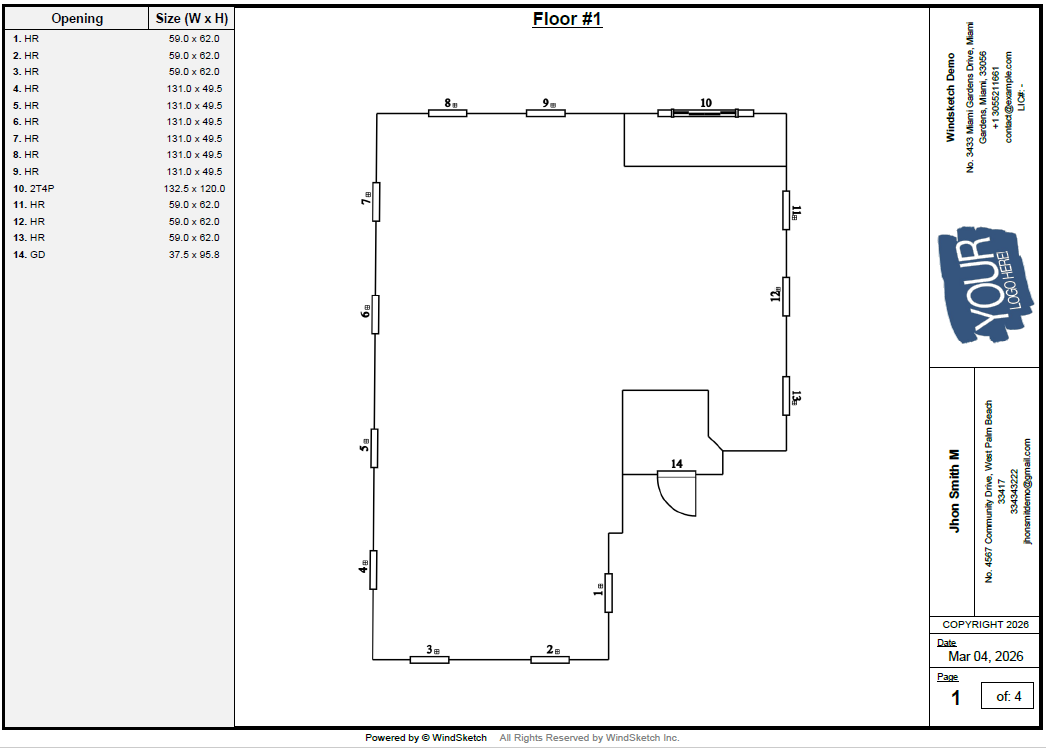
For many contractors, the process starts with the property map.
Using tools like Windsketch, teams begin by placing the house on a parcel map and identifying each window and door opening. This visual layout becomes the backbone of the entire project — connecting measurements, product selections, and permit documentation into a single reference.
The map is more than just a drawing.
It allows teams to:
In many companies, what once lived in scattered sketches, spreadsheets, and notes is now centralized into a single project workspace.
And from that workspace, the next step emerges naturally.
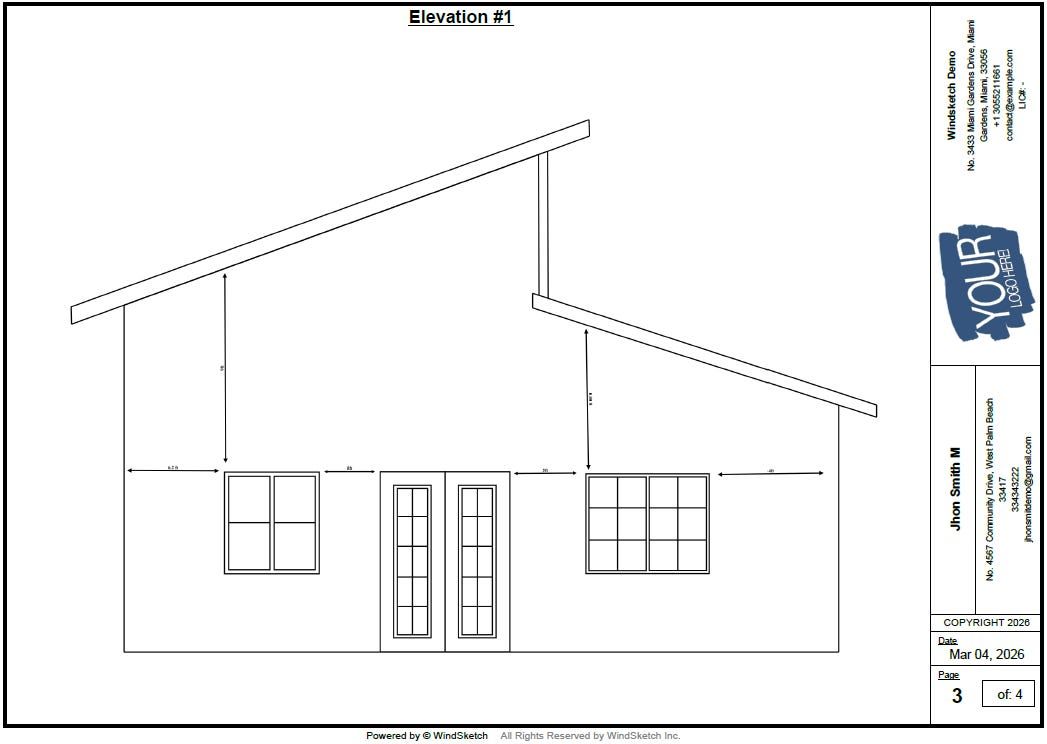
Once the openings are mapped, creating the front, rear, or side elevations becomes a straightforward task. Using simple drawing tools, a team member can outline the façade and place each window and door opening in just a few minutes.
These drawings show the home exactly as it appears from each direction — displaying the placement, proportions, and relationships between windows and doors. Elevations are essentially a straight-on representation of one side of the building, helping everyone understand how the structure actually looks.
For permit departments, this clarity is invaluable.
Instead of reviewing fragmented information, reviewers see a clean visual of the building façade with each opening identified.
Companies using digital elevations often report that their permit packages become easier to review because everything is presented clearly in one document.
And in many cases, the elevation can be generated in minutes directly from the project data, rather than drafted separately in CAD software.
The result is faster submissions — and fewer back-and-forth corrections.
But elevations aren’t just for engineers and permit offices.
Sales teams have discovered another use: decision-making.
Imagine a homeowner choosing between:
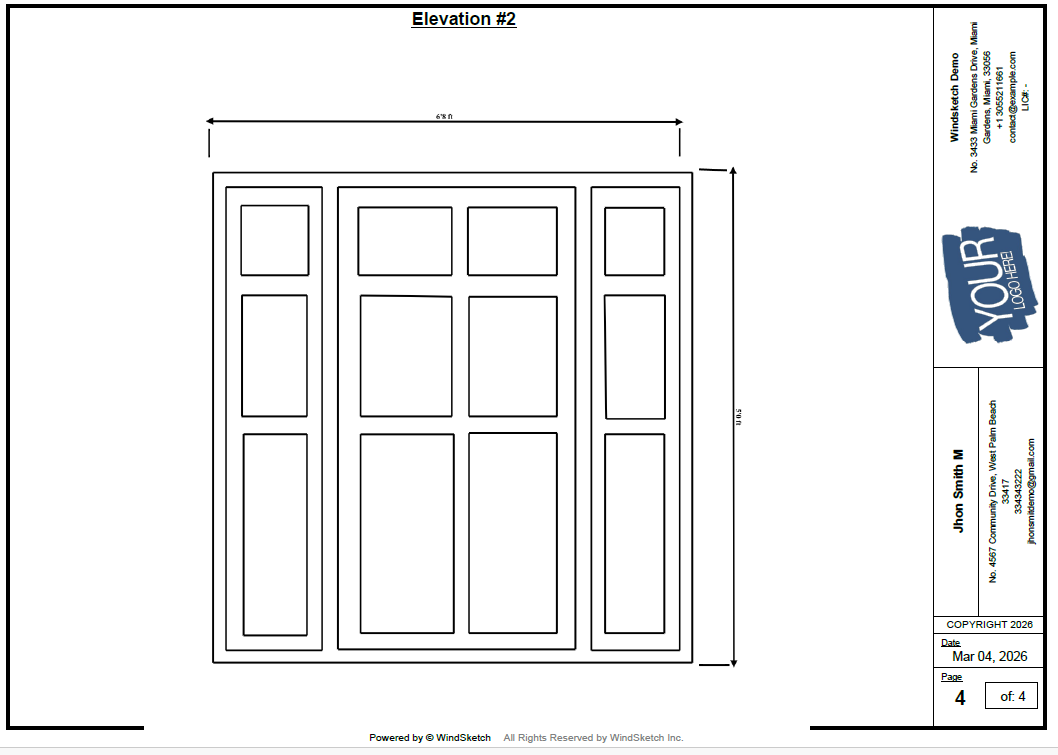
Instead of trying to picture the differences verbally, the contractor can show two visual elevations side by side.
The homeowner instantly understands the scale, proportions, and visual impact.
It turns an abstract decision into something tangible.
And that visual clarity often shortens the sales process.
Inside many window and door companies, elevations are becoming part of the daily workflow.
They support:
And because modern tools can generate them directly from the project data, the elevation becomes a natural extension of the quoting process.
Not an extra step.
Just another layer of clarity.
In the past, elevations were something only large architectural firms produced regularly.
Today, they’re quietly becoming standard practice for window and door companies that want to move faster — and avoid mistakes before they happen.
The biggest changes in an industry rarely arrive as headlines.
They arrive as tools that make everyday work easier.
For window and door contractors, digital elevations are quickly becoming one of those tools.
A drawing that once took hours now takes minutes.
A conversation that once required explanation now requires only a glance.
And in a business where precision matters — from permits to installation — that small shift can make an enormous difference.
Curious how companies are generating elevations in minutes?
Discover how Windsketch helps contractors create maps, elevations, and permit-ready documentation in one place.
👉 Book a short demo and see it in action.

Jamie McKinsey is the SDR Manager at Windsketch, leading the sales team with passion and strategy. With a background in business development and lead generation, she focuses on optimizing processes to maximize booked demos. Her people-centered approach and results-driven mindset have been key to driving the company’s growth in the window and door solutions industry.